
Sep 15, 2026
Workshop on Beaver Monitoring Methods
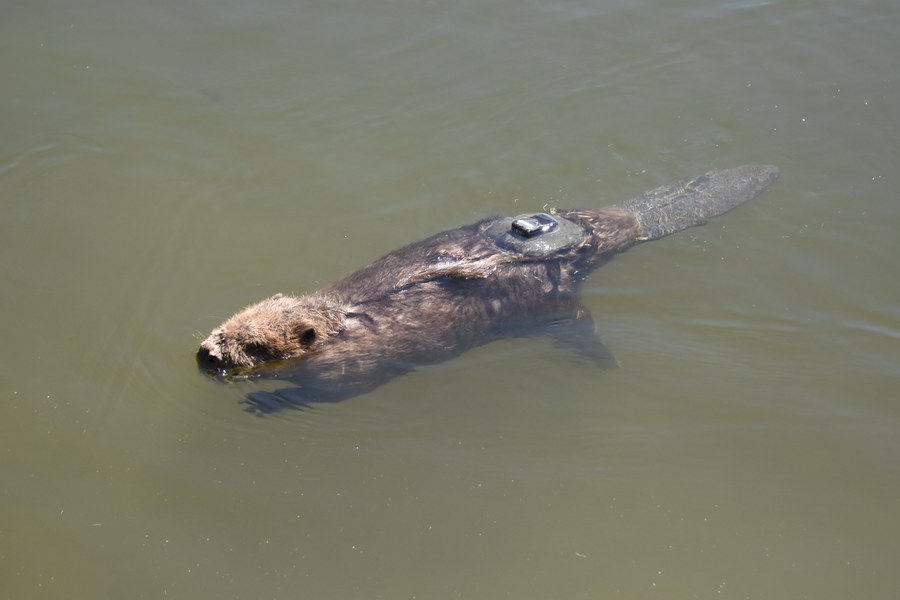
In the midst of a sweltering summer, colleagues from ALKA Wildlife and LPV (Landschaftspflegeverband Sächsische Schweiz – Osterzgebirge) joined the team from the Czech University of Life Sciences (ČZU) for a two-day joint field monitoring campaign. During a week-long field campaign in the Šluknov Hook, colleagues from the Czech University of Life Sciences captured beavers, which they then fitted with GPS transmitters for telemetric tracking. The main focus of the meeting was to discuss and share experiences with various beaver monitoring methods. The meeting also included the practical application of these methods at several project sites. Czech University of Life Sciences colleagues, who hold the necessary permits and have many years of experience, set up beaver traps at new locations. To everyone’s delight, one adult female beaver was successfully captured during the meeting. After a health check and measurement of her body dimensions, the female was fitted with a GPS transmitter, which will allow us to track her movements in the coming months. In the evening, we tested state-of-the-art thermal imaging equipment together, which can be used to track beavers in the dark. Beavers are primarily active at night, so visual observation of them is practically impossible without thermal imaging. With the help of a drone equipped with a thermal imaging camera, the female beaver named Čenda—who had already had an active GPS transmitter for several days—was located and checked.
Colleagues from ALKA Wildlife and LPV also toured the individual project sites together to prepare for a planned public field trip. Preparations for the field trip are therefore in full swing, and you can look forward to receiving an invitation with a detailed itinerary very soon.

© A. Vorel / CZUP

© A. Vorel / CZUP

© A. Vorel / CZUP


