
Oscar Barreca
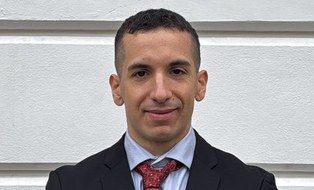 © Oscar Barreca
Wissenschaftlicher Mitarbeiter
NameHerr Oscar Barreca Dipl.-Ing.
Eine verschlüsselte E-Mail über das SecureMail-Portal versenden (nur für TUD-externe Personen).
Oscar Barreca ist seit Dezember 2025 als wissenschaftlicher Mitarbeiter am Lehrstuhl für Automatentheorie tätig. Sein Hauptforschung beschäftigt sich mit dem Einsatz Abstract Argumentation Methoden für Reparaturen in Description Logics Wissenbasen.
Veröffentlichungen
2026
Franz Baader and Oscar Barreca: Errors Need Not Show Up as Inconsistencies: From Error-tolerant Reasoning to Argumentation Frameworks. In Logical Approaches to Handling Inconsistent Data (LINDA), 2026.
Abstract BibTeX Entry PDF File
Abstract BibTeX Entry PDF File
Description logic (DL) knowledge bases (KBs) built by hand or (semi)automatically using machine learning or information retrieval tools may contain errors, often detected when reasoning derives an inconsistency. However, not all errors cause an inconsistency. Such errors may be noticed when reasoning produces a consequence that follows from the KB, but does not hold in the application domain modelled by the KB. In fact, some applicationrelevant DL KBs such as the large medical ontology SNOMED CT are written in DL dialects, like \(EL\), that cannot even express inconsistencies. Eliminating an inconsistency or an unwanted consequence by removing a minimal amount of information from the KB is usually called repair in the DL literature. Instead of producing a single new KB as a repair, inconsistency-tolerant reasoning takes all repairs of a detected inconsistency into account, e.g., by producing consequences that follow from all repairs or from some repair. This notion can be extended to repairs that remove an unwanted consequence, in which case it is called error-tolerant reasoning. This paper shows in an exemplary way how results for inconsistency-tolerant reasoning can be transferred to error-tolerant reasoning. To this purpose, it generalizes an existing approach connecting inconsistency-tolerant reasoning over prioritized DL-Lite KBs and argumentation frameworks to the setting of error-tolerant reasoning for \(EL\) KBs.
@inproceedings{ BaaderErrors2026,
  author = {Franz {Baader} and Oscar {Barreca}},
  booktitle = {Logical {{Approaches}} to {{Handling Inconsistent Data}} ({{LINDA}})},
  title = {Errors {{Need Not Show Up}} as {{Inconsistencies}}: {{From Error-tolerant Reasoning}} to {{Argumentation Frameworks}}},
  venue = {Lisbon},
  year = {2026},
}
Oscar Barreca, Thomas Eiter, and Davide Soldà: On the Complexity of Model Checking for Temporal Equilibrium Logic. In Logic Programming and Nonmonotonic Reasoning. Springer, 2026. To appear.
Abstract BibTeX Entry ©Springer-Verlag
Abstract BibTeX Entry ©Springer-Verlag
Given an interpretation \(I\) and a formula \(\varphi\) written in a logic \(L\), the problem of model checking (MC) for \(L\) is the problem of determining whether \(I\) is a model of \(\varphi\). In this work, the computational complexity of MC for temporal equilibrium logic (TEL), a temporal extension of ASP, is investigated. The complexity of the universal and the existential variant of MC for TEL over Kripke structures, and of MC over linear traces, is determined. The complexity of these problems when the set of temporal operators, the temporal height or the implication height of the input formula is restricted is also determined.
@inproceedings{ BarrecaComplexity2026,
  author = {Oscar {Barreca} and Thomas {Eiter} and Davide {Sold\`a}},
  booktitle = {Logic {{Programming}} and {{Nonmonotonic Reasoning}}},
  note = {To appear.},
  publisher = {Springer},
  title = {On the {{Complexity}} of {{Model Checking}} for {{Temporal Equilibrium Logic}}},
  venue = {Klagenfurt},
  year = {2026},
}
Generated 30 September 2026, 18:15:45.
Technische Berichte
Generated 30 September 2026, 18:15:34.
Auszeichnungen und Anerkennungen
- Best Paper & Best Student Paper Award für On the Complexity of Model Checking for Temporal Equilibrium Logic, Logic Programming and Nonmonotonic Reasoning 2026.