
Research Group Synthetic Biotechnology and Systems Biology
Traditional metabolic engineering involves the inactivation and enhancement of individual reactions in the metabolic networks of production strains in a targeted manner to optimize the biosynthesis of a target molecule. Although this technology can yield remarkable results, the range of molecules that can be produced in this way is limited to natural metabolites.


© Schmidt


© Schmidt
© Schneider
© Schneider
© Schneider
© Schneider
To expand the range of substrates that can be utilized by microorganisms and the products that can be produced, we design synthetic metabolic pathways and implement them in a targeted manner by engineering enzymes and production strains.
A major focus of our work is the establishment of synthetic metabolic pathways for the utilization of green ethylene glycol (EG), which can be produced (electro)chemically fromCO₂ or through the hydrogenolysis of lignocellulose. Compared to other microbial substrates derived fromCO₂, such as methane, synthesis gas, or methanol, EG offers a number of process-related advantages. These include, in particular, the avoidance of a phase transition in the substrate, the low oxygen demand of EG assimilation, and a favorable stoichiometry of the synthetic metabolic pathways for the production of even-numbered molecules. Overall, this technology aims to make the use ofCO₂ and biomass more attractive in the circular economy.
In addition, we are developing enzyme systems for the cell-free regeneration of ATP from cost-effective basic chemicals. These systems can be coupled with a variety of ATP-dependent enzymatic product syntheses and are intended for application, for example, in the field of cell-free protein expression.
In our work, we apply modern computer-aided methods (flux balance analysis, enzyme structure modeling) and experimental techniques (¹³C-basedmetabolic flux analyses, metabolome analyses, rational and evolutionary enzyme design) to efficiently implement metabolic pathways and develop strains.
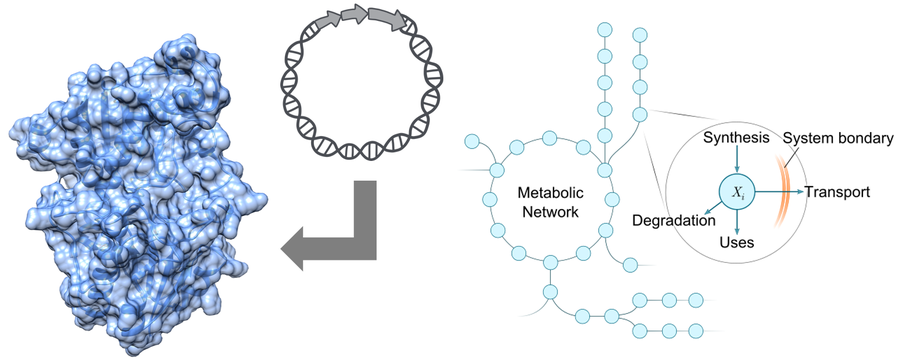
3D-Modell eines Enzyms und metabolisches Netzwerk
Research Focuses:
- Synthetic metabolic pathways for the utilization of ethylene glycol (derived fromCO₂ or lignocellulose) for microbial product synthesis
- Systems biology characterization of production strains and cell systems
- Development of ATP-regenerating enzyme cascades for cell-free reaction systems
- ESFplus Early-Career Research Group CARBONCYCLE
Projects of the Bioprocess Engineering Research Group:
All research projects of the Chair of Bioprocess Engineering
- ScampiLys – Production of lysine from shrimp waste (in collaboration with Hanoi University of Science and Technology, funded by BMBF)
- SynBioMet – Use of synthetic biology for the production of 2,4-dihydroxybutyrate (in collaboration with ESPCI Paris, INSA Toulouse, and Adisseo; funded by SAB)
- Enzyme cascades for cell-free ATP regeneration for the synthesis of valuable substances (funded by ZIM and DFG, in collaboration with c-LEcta and the University of Hamburg)
- Development of a synthetic metabolic pathway for the carbon-conserving production of acetyl-CoA from ethylene glycol (funded by the DFG)
- Enzyme cascades for cell-free ATP regeneration for the synthesis of valuable substances (funded by ZIM, in collaboration with c-LEcta)
- CoBioMetal – Combined biotechnological and electrochemical wastewater valorization for metal recovery. Subproject: Systems biology investigation of fungal strains during metal recovery from process wastewater (funded by the SAB, in collaboration with the TU Bergakademie Freiberg)
- KoSyn – Controlled Synergy: Peptide-mediated cell-to-cell communication between yeasts and bacteria in (bio)technological processes (funded by the ESF, in collaboration with the Chairs of General Genetics, General Microbiology, and Hydrochemistry, all at TU Dresden)
Research Group Leader:
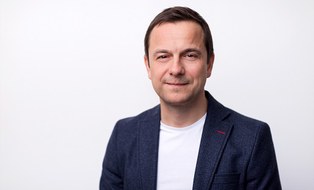 © Ritz
Prof. Dr.-Ing. Thomas Walther
Send encrypted email via the SecureMail portal (for TUD external users only).
Researchers in the research group:
 © Mann
Project researcher
NameDr. Claudio Frazão
Synthetic Biotechnology and Systems Biology
Send encrypted email via the SecureMail portal (for TUD external users only).
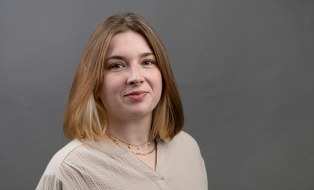
Wissenschaftliche Mitarbeiterin
NameMs Laura Lilienthal M. Sc.
Synthetische Biotechnologie und Systembiologie
Send encrypted email via the SecureMail portal (for TUD external users only).
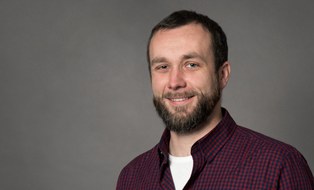 © Mann
Project researcher
NameM.Sc. Kenny Rabe
Synthetic Biotechnology and Systems Biology
Send encrypted email via the SecureMail portal (for TUD external users only).

wissenschaftlicher Mitarbeiter
NameMr Johannes Radde M.Sc.
Send encrypted email via the SecureMail portal (for TUD external users only).

Research associate
NameDipl.-Ing. Elly Straube
Synthetic biology and systems biology
Send encrypted email via the SecureMail portal (for TUD external users only).

Wissenschaftlicher Mitarbeiter
NameMr Alrik Titze Dipl.-Ing.
Synthetische Biologie und Systembiologie
Send encrypted email via the SecureMail portal (for TUD external users only).