
Jun 12, 2026
FOVOG @ UAM Workshop April 20–22, 2026
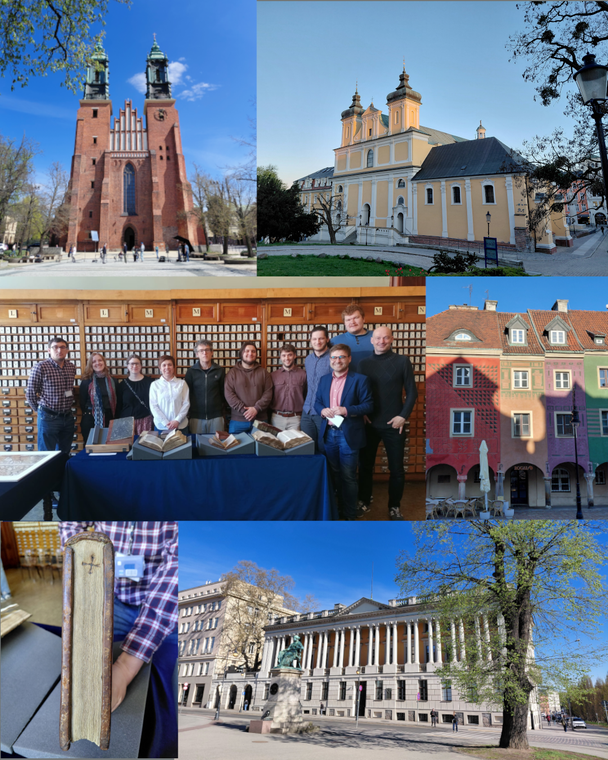
On April 21, 2026, the first workshop—initiated by Daniela Bianca Hoffmann and Rafał Witkowski—between staff members of the Research Center for Comparative History of Religious Orders (FOVOG) and the Adam Mickiewicz University Adama Mickiewicza in Poznań (UAM). The aim of the event was to introduce researchers from both institutions to one another and to develop prospects for future cross-border collaborations as well as joint research projects. To this end, ongoing projects and workshop reports were presented and discussed in a hybrid format.
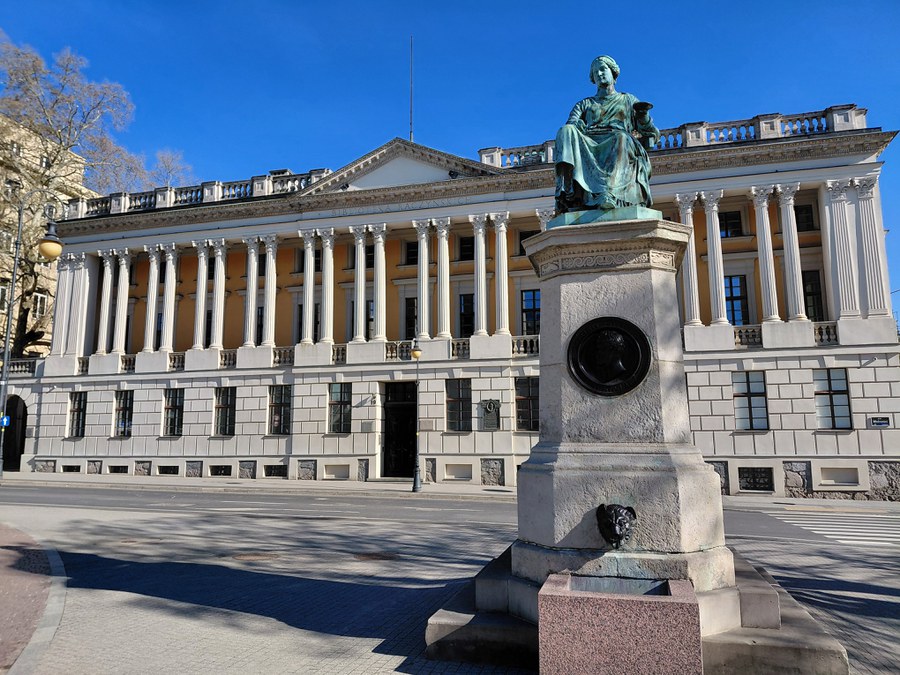
Raczyński-Bibliothek in Poznań
The day before, the guests from Dresden were given a guided tour of selected manuscript collections at the Raczyński Library by experts Jakub Kujawiński, Miłosz Sosnowski, and Bartosz Jabłoński. The visit not only offered the opportunity to become acquainted with significant sources of medieval tradition but also highlighted the central role of manuscripts and material tradition for many of the research projects presented.
The workshop was opened by Rafał Witkowski; Mirko Breitenstein provided an introduction to possible forms of future collaboration. The subsequent presentations reflected the thematic breadth of the research conducted at both institutions. Among the projects presented were studies on monastic networks, diplomatic network research, the normative and ritual foundations of monastic leadership transitions, hagiographic sources and prosopographic studies, issues of memory culture, censorship and textual transmission, as well as editorial and archaeological research projects. Despite the different approaches, numerous thematic points of contact emerged, which were repeatedly addressed during the discussions.
The concluding roundtable, moderated by Emilia Jamroziak, was of particular significance. Several common research areas were identified from the presentations and discussions, revealing considerable potential for future collaboration. These include, in particular, networks in times of crisis and violence, networks of knowledge, and processes of textual transmission and textual development; issues of memoria, identity, and information control in monasteries; archaeological approaches to the history of religious orders; and the relationship between local, regional, and order-wide contexts. These topics will now be further discussed within the participating institutions and developed into concrete plans for future joint projects.
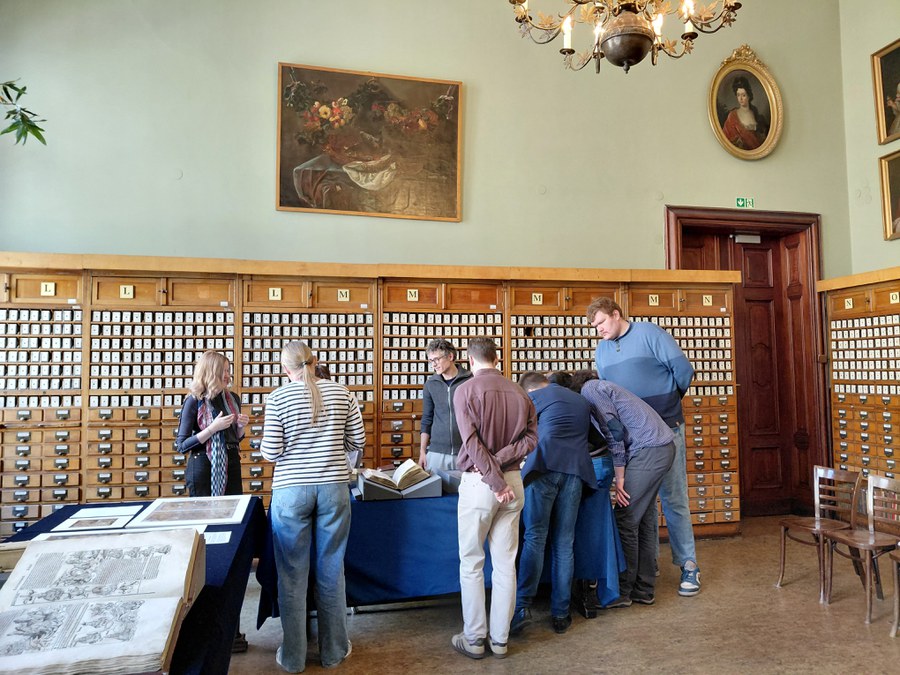
Universitätsbibliothek Poznań
On the final day, a visit to the Poznań University Library was on the agenda. Together with students, participants were able to view additional manuscripts and prints, including a first edition of Schedel’s World Chronicle. This brought the workshop full circle, once again underscoring the significance of written tradition both as a subject of research and as the foundation for future collaborations.
Overall, the workshop provided a successful framework for presenting current research, professional exchange, and getting to know the participating scholars personally. The numerous overlaps in content and the thematic areas identified during the roundtable discussion highlighted the potential for deeper collaboration between FOVOG and UAM. A return visit to Dresden is currently being planned, during which the discussions that have begun will be continued and the ideas developed will be further refined.