
Sep 30, 2026
22 Measures, One Goal: How TUD aims to become greenhouse gas neutral by 2035
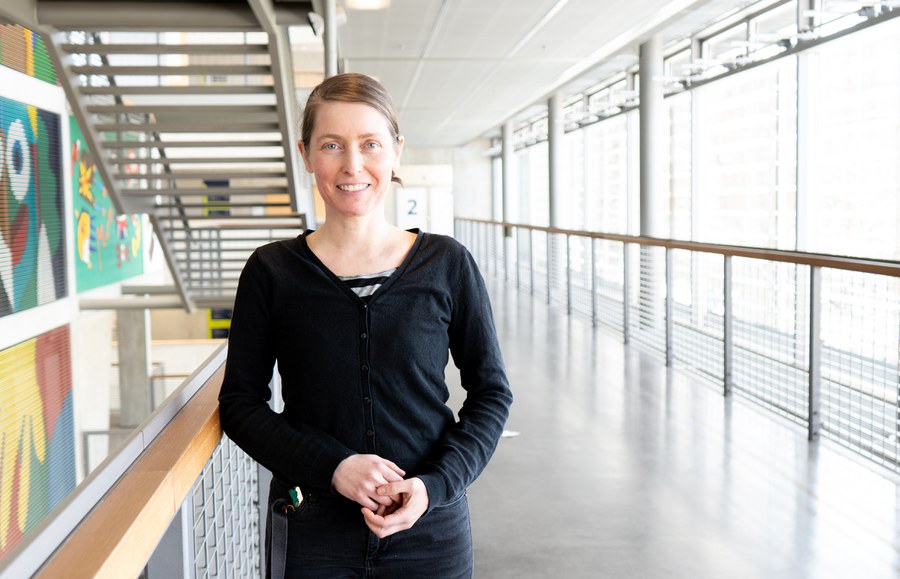
Marie-Luise Steffler, Advisor for Climate Protection at TUD
TUD’s Integrated Climate Protection Plan has been completed: This summer, both the Senate and the University Executive Board unanimously approved the plan. This marks an important step forward. However, a plan by itself does not reduce emissions.
The plan shows where TUD can take action on climate protection, what changes are necessary, and what it can do itself. At the same time, it becomes clear: Not all decisions are within the university’s control. What does this mean for implementation? Where can TUD act on its own, where are other stakeholders needed — and how will the 22 prioritized measures translate into concrete measures? We discuss these questions with our Climate Protection Advisor.
On December 4, 2026, from 1:00 p.m. to 2:30 p.m., we invite interested members of the TUD community to join us as we present the newly adopted climate protection plan, engage in discussion, and explore ways to get involved together.
Registration: klimaschutz.management@tu-dresden.de
1. Why does TUD need a Climate Protection Plan in the first place?
First and foremost, a Climate Protection Plan creates a common foundation: It highlights where TUD’s greenhouse gas emissions come from, what options for action exist, and who can take responsibility for which steps. This is particularly important for a university with numerous locations, buildings, and different areas of responsibility.
Not all decisions rest with the TUD itself. For example, the buildings are not owned by the university. Most utility contracts are also entered into by the Free State of Saxony. The university itself is responsible for other matters and can therefore act on its own. The Climate Protection Plan therefore helps distinguish between TUD’s own scope for action and that of other stakeholders.
This makes climate protection a shared responsibility: Where TUD can make its own decisions, it can act directly. Where other stakeholders are involved, the goal is to clearly articulate TUD’s own requirements and interests, and to drive change forward together. The plan is thus not only an action plan but serves as a foundation for communication and collaboration.
2. Why was TUD’s goal of greenhouse gas neutrality set for the year 2035?
The goal of greenhouse gas neutrality by 2035 aligns with TUD’s sustainability strategy. The year 2035 is, above all, a target that provides direction and calls for action. A transformation that is jointly designed and supported does take time. Necessary changes, as well as planning and investment processes, must be initiated early on. The sooner the transformation begins and the faster reliance on fossil fuels is reduced, the sooner emissions can also decrease.
3. Where are the greatest opportunities for reducing emissions — and where are the greatest challenges?
Procurement offers a particularly significant lever. It is the largest contributor to TUD’s greenhouse gas emissions. It is a central issue as to what the university purchases and the criteria it uses to make procurement decisions. More sustainable procurement can be systematically embedded through appropriate guidelines and processes. TUD’s procurement policy is an important starting point in this regard.
One challenge, however, is to quantify the emissions associated with procurement as accurately as possible. The available emission factors and data are subject to some uncertainty. This means: The emissions inventory cannot report an exact amount of emissions for every product and every service. This makes it all the more important to work with the available data and continuously improve its quality. At the same time, it is essential to focus on areas where the greatest reductions in emissions can be achieved.
There are also opportunities for action when it comes to business travel. This demonstrates that climate protection does not work solely through central guidelines, but also through good examples set from within the university. The Chair of Industrial Design Engineering, for example, demonstrates how travel activities and their impacts can be systematically analyzed and integrated into everyday work. A guide is currently being developed that can also provide guidance for other areas.
4. How did the Climate Protection Plan come about, and what role did the involvement of the university community play?
The development of the Climate Protection Plan was a collaborative process involving various departments and stakeholders at TUD. TUD was supported in this effort by the firm plant values GbR, which contributed its expertise in preparing the GHG inventory, developing measures, and designing the process. At the same time, it was crucial to incorporate perspectives and experiences from within the university itself.
At the future workshop in January 2026, TUD members were able to share their perspectives, experiences, and ideas. The Climate Protection Plan Working Group of the Environment Commission, the Environmental Protection Group, and the Sustainability Management team were also involved in developing both the measures and the Climate Protection Plan. This allowed for the integration of diverse perspectives and ensured that the measures were tailored to the specific conditions at TUD.
The subsequent deliberations and decision-making within the university bodies led to the Senate and the University Executive Board unanimously approving the plan. This now provides a common foundation for further work.
5. What’s next?
With the adoption of the Climate Protection Plan, a common foundation has been established for further work. The next step is to implement the goals and measures outlined in the plan. To do so, we must define specific responsibilities, establish timelines, and allocate the necessary resources. At the same time, implementation should be viewed as an ongoing process: Practical experience can reveal where measures need to be adjusted, further developed, or supplemented.
The 22 prioritized measures are closely linked to TUD’s environmental program and its sustainability strategy. For some projects, TUD can take immediate action on its own; for others, coordination with partners and decision-makers is necessary.
Climate protection thus becomes a cross-cutting task that affects many areas of the university. It will be crucial to make consistent use of the opportunities available to TUD while simultaneously initiating collaborations where change cannot be achieved by the university alone. In this way, the Climate Protection Plan can be turned step by step into concrete action — and the shared goal into measurable progress.